
You talk to the person who builds it
No manager between you and the maker. The studio makes the technical, design and strategic decisions. If something goes wrong — we own it, we don't pass it off.
You pay for results. And you know exactly who's accountable for them.
Most studios hand your project to a junior who's juggling six other clients at the same time.
You message a manager. He passes it to a developer. The developer doesn't know your business. A month later you get a site where the order button sits exactly where nobody looks for it. Edits drag on. The deadline slips. You explain one thing. You get another.
A month of delay for an online store is sales that never happened — before launch even began. A site that doesn't reach the top of Google costs more than the SEO bill. It costs every lead you never received.

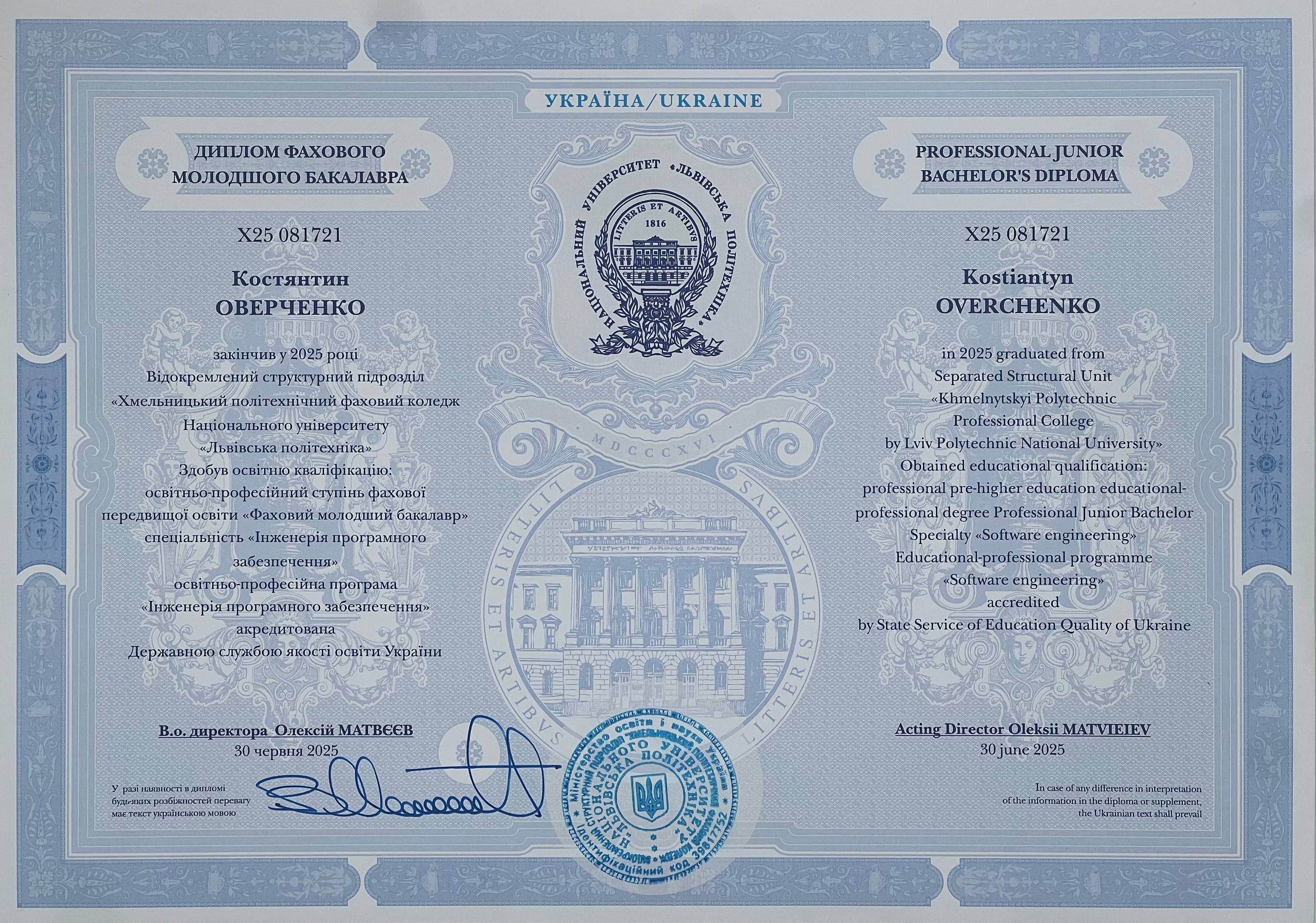
The startI came into web development through college. I chose the field deliberately, and the sense that this is my craft has never once faded. College wasn't enough, so I took specialised courses. That's where the understanding I still carry into every project took shape: a website isn't design. It's a tool that either earns the business money, or simply takes up space.
The observationAmong the people I knew were entrepreneurs without a website. They believed Instagram was enough. I saw it differently. A website is trust before the first contact. It's presence in Google when a potential client searches for a service at 11 p.m. and no social network answers anymore.
The first resultI offered to build a site for the first person I knew. The result was simple and concrete: enquiries grew without any advertising. The second project came through a referral. Then a third. At some point it became clear this wasn't a side gig — it was the work.
Overchenko StudioThat's how OVERCHENKO STUDIO came to be. One principle: every project is led by one team, from the first call to launch. No handoffs between departments. No lost context. You always know who's responsible for what.
No manager between you and the maker. The studio makes the technical, design and strategic decisions. If something goes wrong — we own it, we don't pass it off.
Most studios build the site and then hand it to an SEO specialist. We start with architecture and semantics before the first mockup. Sites load in under 2 seconds on 3G — a direct advantage in search.
Projects ship in 3–6 weeks. We never run more than two projects at once. Your site gets full attention, not a slice of it split across five other tasks.
Four stages. Each ends with a concrete result. You see what's happening at every step.
A 30–60 minute call or meeting. We work out how your business makes money, who your client is and what queries they type into Google. Then comes a technical brief with the site architecture and a list of keywords.
Week 1First a wireframe in the browser — structure without colour. You sign off on the logic. Then the full design with branding and components. One round of edits included.
Weeks 2–3Build to design, CMS hookup if needed, meta tags, structured data, speed and the mobile version. We hand it over with pages already filled in and the copy ready.
Weeks 3–5We publish the site and connect analytics and Search Console. Depending on the package, we stay in touch for up to a month after launch — fixing bugs, watching indexing, answering questions within a day.
Week 6 + up to 1 monthorganic queries per month — King Gym after 3 months with no advertising. It was 12.
years in SEO and web development. Hundreds of projects across dozens of niches, from fitness to e-commerce.
maximum load time on 3G. Speed isn't aesthetics — it's your position in Google.
King Gym · Khmelnytskyi · Google Search Console data
I don't make websites. I build a sales tool — one that makes the client stop spending money on ads, because the site brings people in on its own.